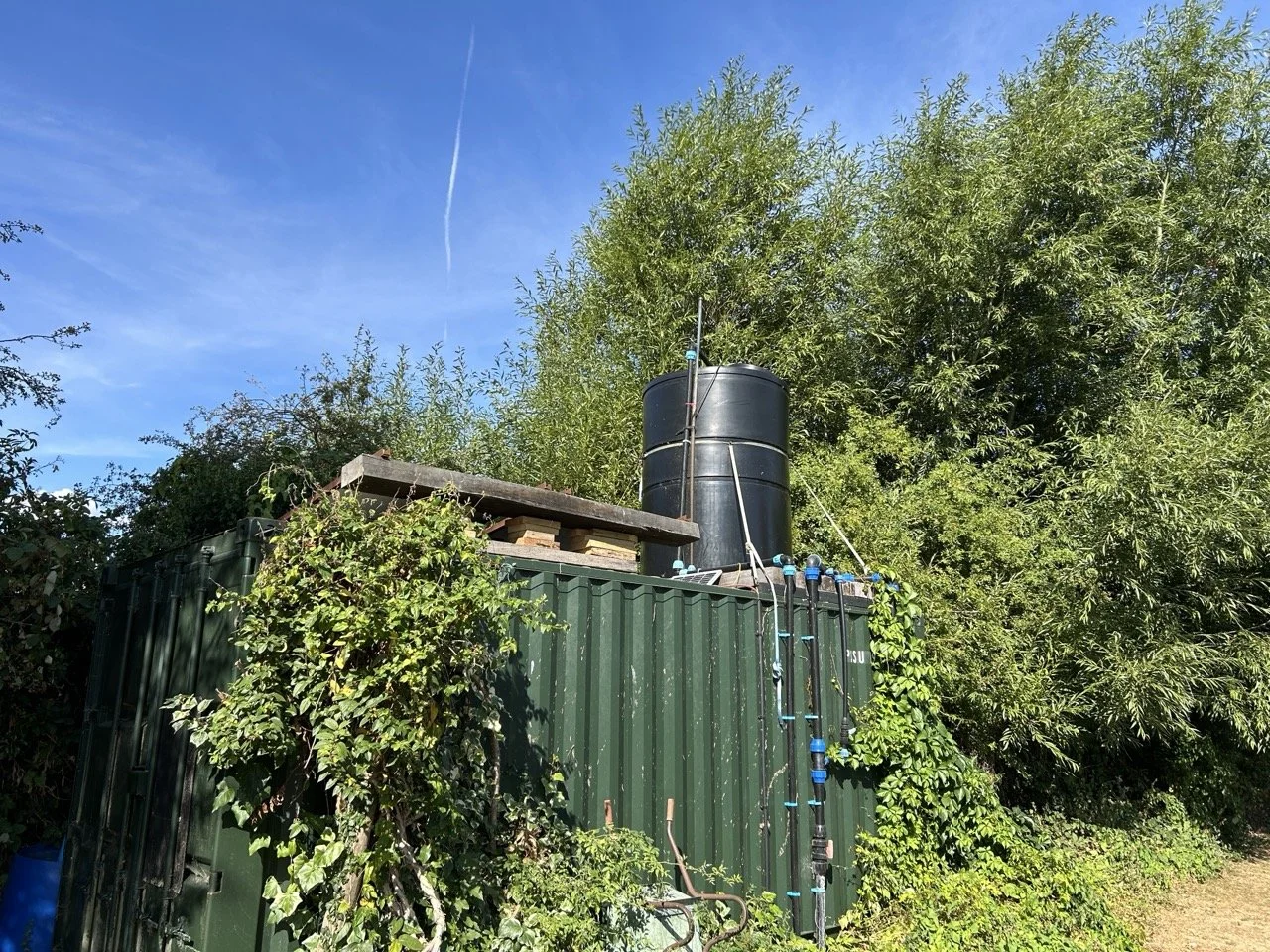
Our water system
We are incredibly lucky to have a solar-powered water system, set up in 2019-2020 by a band of brilliant volunteers, led by Robin. The water system replaced about 30 old hand dug wells which were shallow and often run dry in summer.
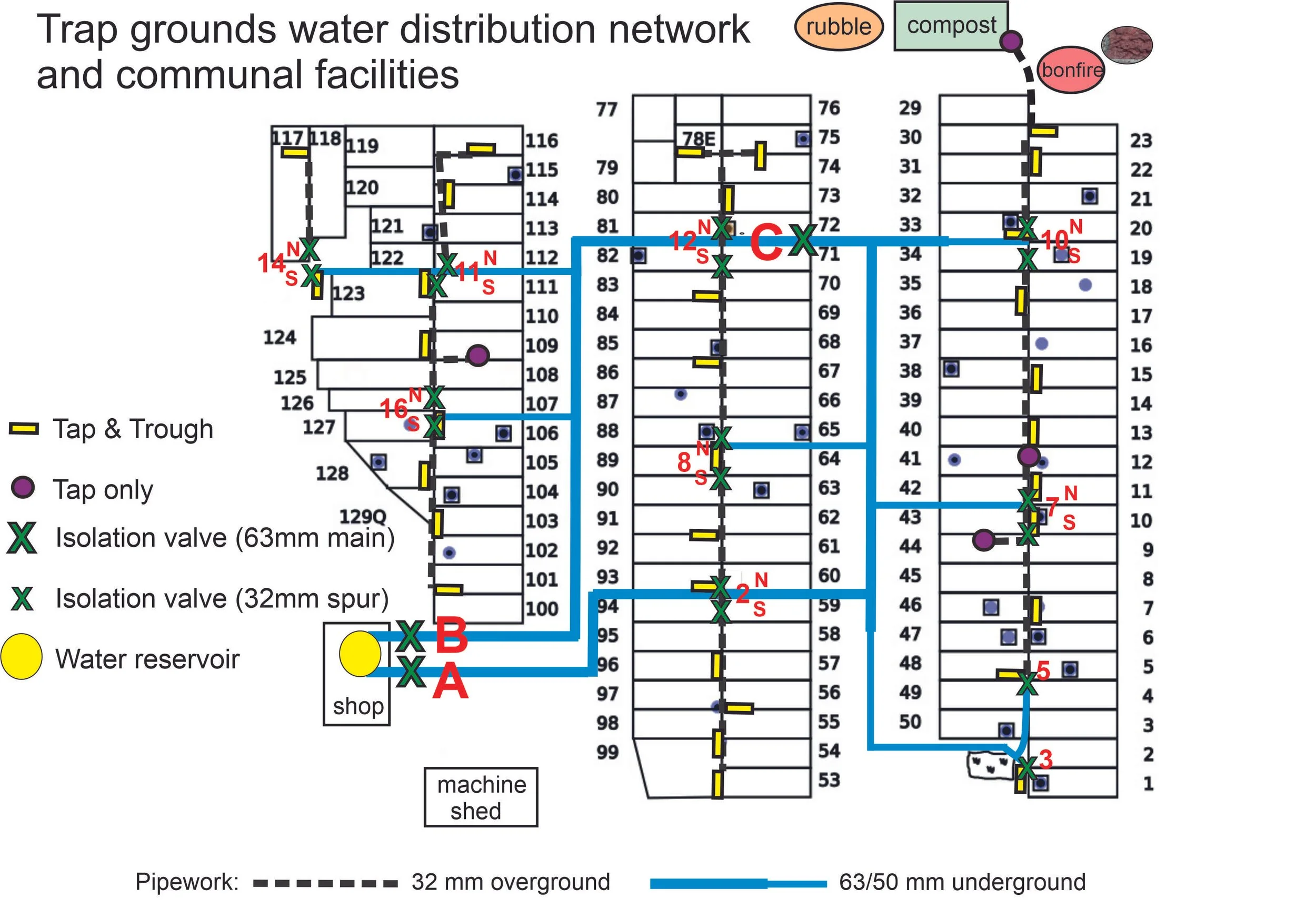
Our water irrigation system comprises 29 dipping troughs, with taps, spread around the site. Each trough services around 4 allotments.
See a map of the system layout below; you can also download a copy. Click below to read more about building our amazing watering system.
“I think many of us would have given up by now if we were still hauling water up from wells. We are indebted to you and everyone who made it happen.”
WhatsApp group chat in July 2026
Water Safety
Do not drink the water or use it for washing your hands. The water is extracted from a bore hole and has not been purified.
Tests have shown that our borehole water contains ammonia but it does not contain heavy metals or other harmful contaminants. Click below to read the water testing data.
You may wish to wash soil off tools, boots or root crops but if you do, please use a bucket to avoid the troughs silting up. It is safe to wash root crops in water run from the taps but they should be washed again at home and peeled before eating/cooking.
Please supervise small children closely on the plots and especially near the water troughs.
This is for their own safety but also to stop them dropping things into the troughs.
Children
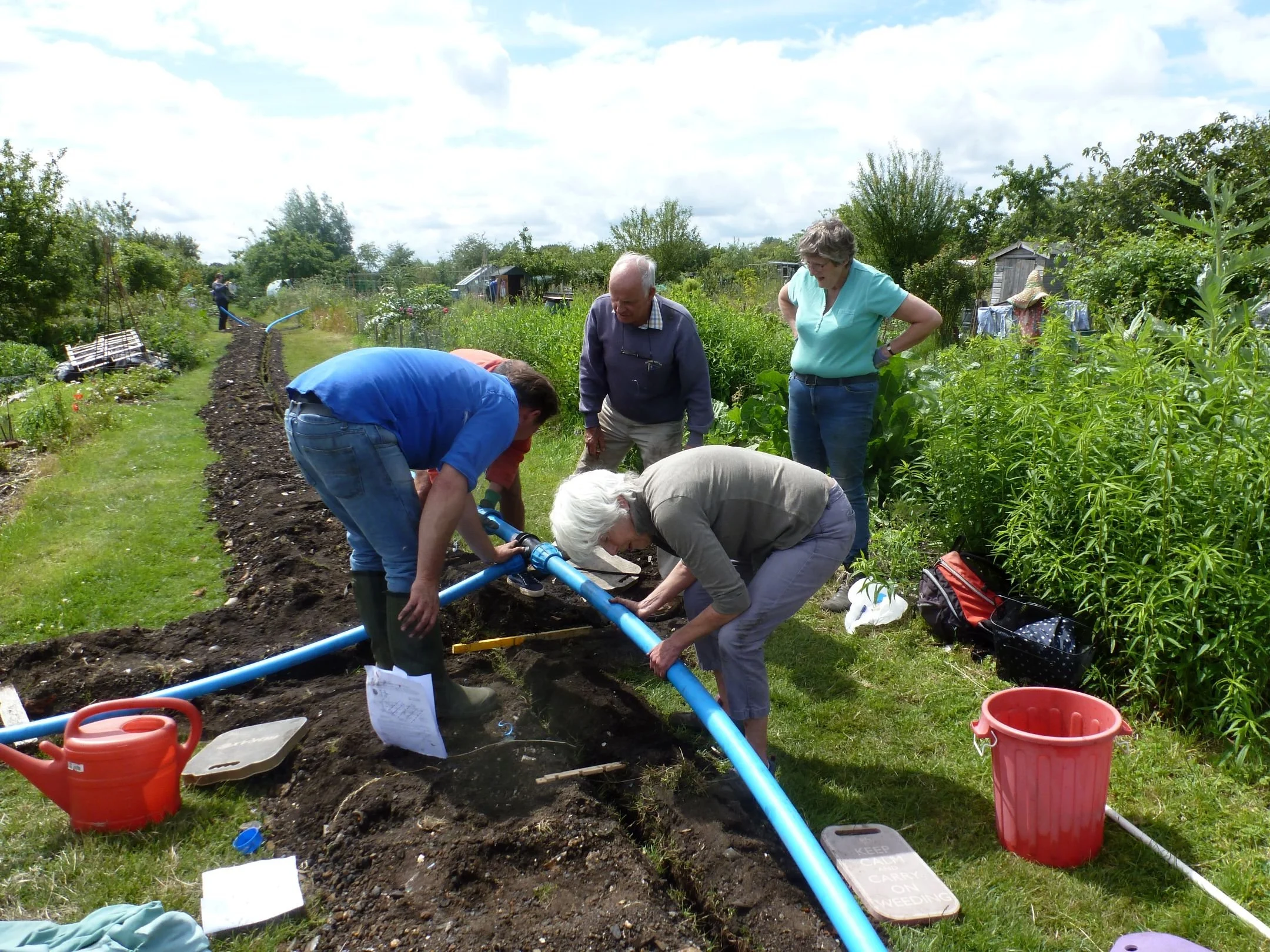
Installing the borehole, tank, solar panels, pipes and troughs in 2019 and 2020 was quite a challenge, involving a team of volunteers and a series of working parties. These photos show a glimpse of the efforts. Maintenance is an ongoing process, led by committee member Robin.
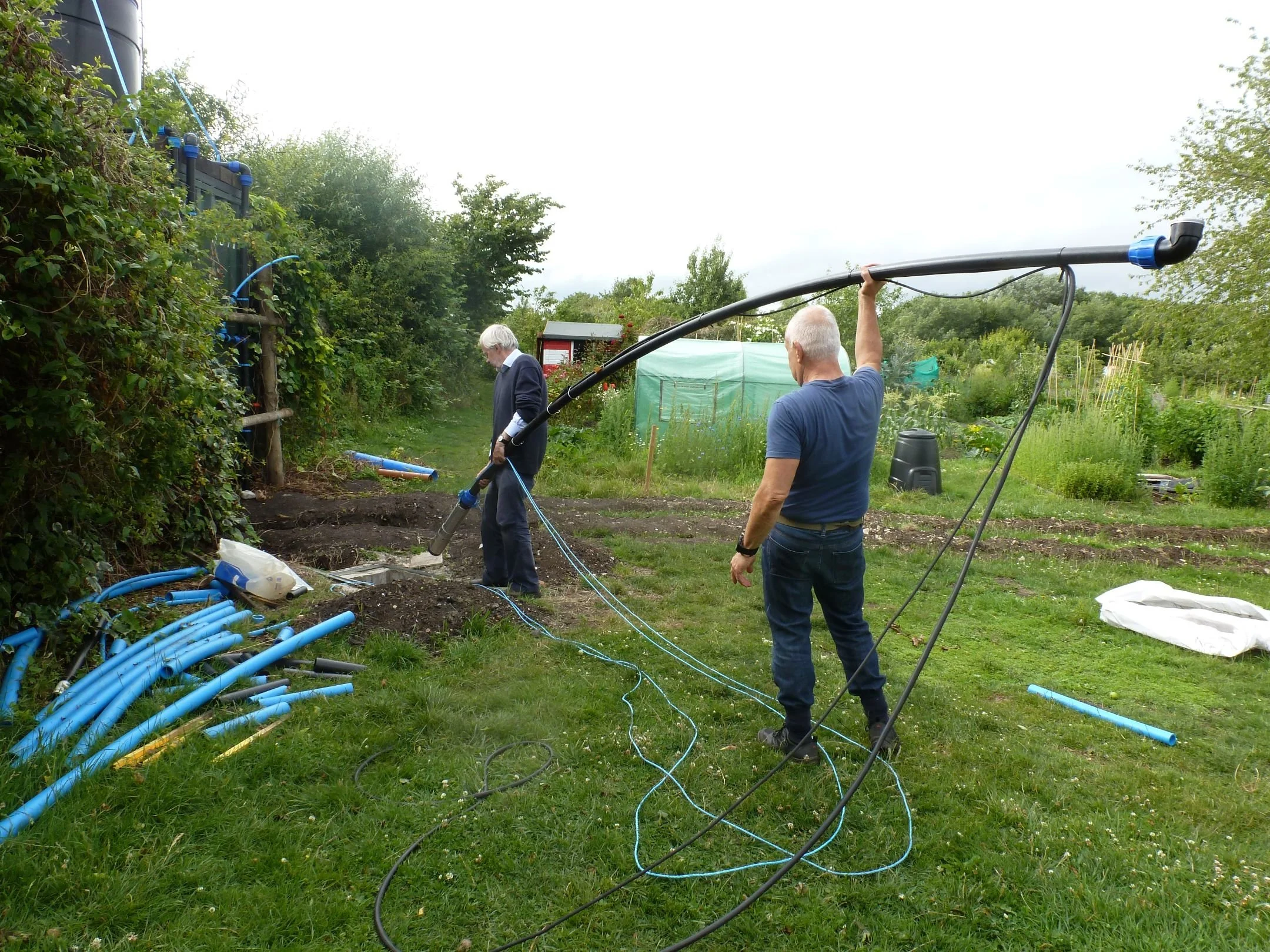
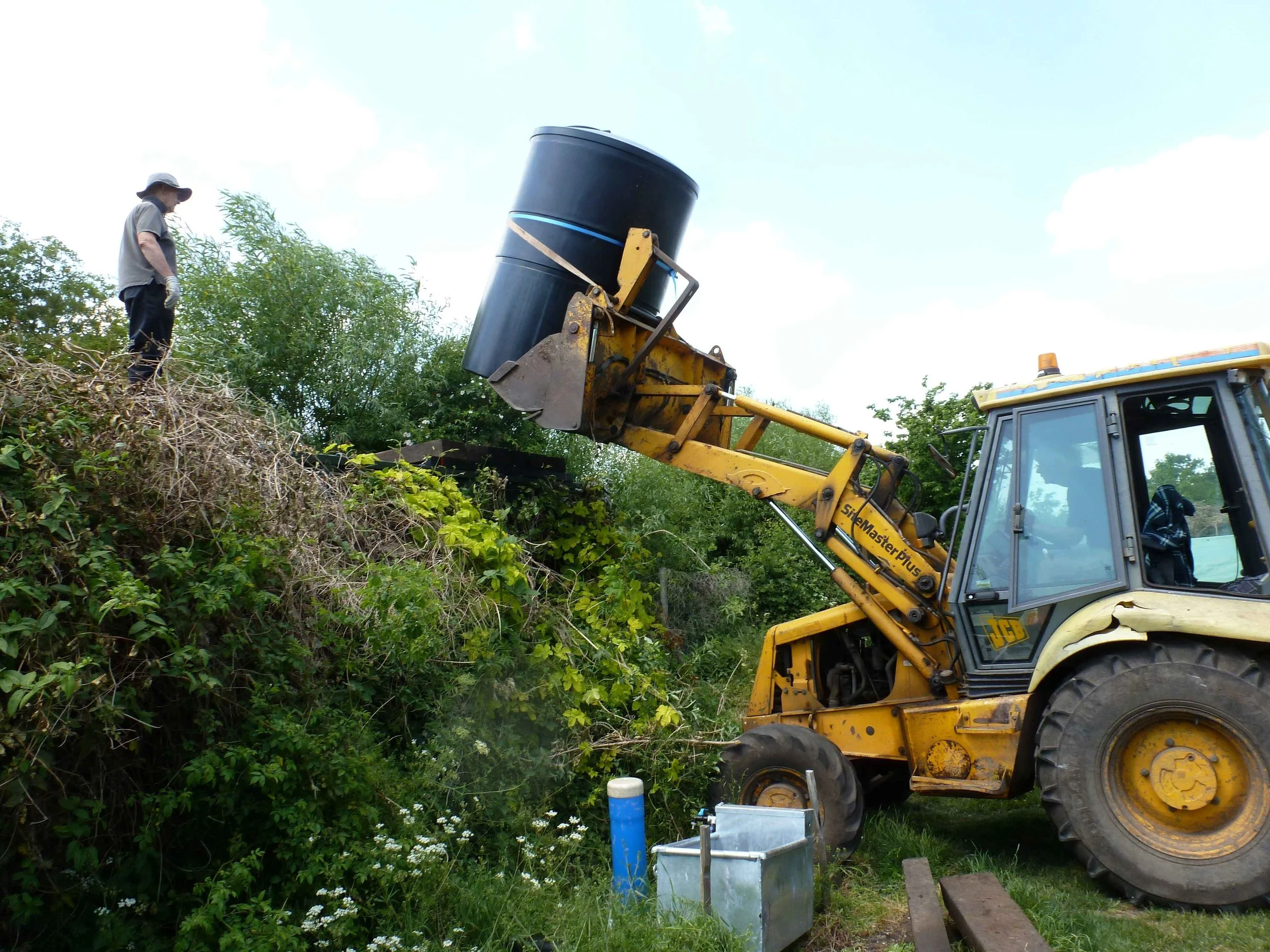
Water is drawn from a borehole which acts as an essentially inexhaustible water source as long as the water table remains within about 3.5m of the surface. Word of mouth suggests that the previously hand dug wells have never shown a level anywhere near this low and in reality this would probably require the Thames to be close to completely dried up. Learn more about the water system by clicking below.
Water system advice
Watering crops
The simplest way of watering is to dip a watering can or bucket into the trough. Alternatively the tap can be used to fill a container. You can use a hosepipe attached to the tap if you wish to fill watering cans closer to your plot, fill a water butt on your plot or water crops directly. Do not be leave the hosepipe in place longer than necessary to complete the task. A permanent connection to the tap, to supply an automatic watering system for instance, may only be made via a 4-way manifold that allows others to access the tap at the same time. You may find a shared hosepipe adequate for everyone’s needs.
Fixing problems
In the case of a major fault where water is escaping in volume, attempts should be made to locally isolate that part of the pipe network. Layout plans which show the positions of the isolating valves are on display on the noticeboards and on the machine shed door. The valves can be turned on and off by hand. Please report any problems that you cannot fix yourself to either Mike or Robin. It is likely that will be minor subsidence where the pipes have been laid. It would be helpful if you could help fill any defects with stones, clinker and shards from your plots, cover with soil or sods and tamp down.
For guidance on cleaning out your trough click below
For guidance on attaching taps and hoses click below
Annual water reports
Robin, the Water System committee member, writes a very informative report each year. Click below to see the latest report.